According to the Text, the Peak in American Family Conformity Occurred at the End of the

38c. The Blitz of Immigrants
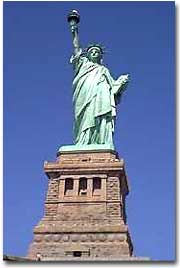
The Statue of Freedom — a souvenir from France upon the U.s.a.' 100th anniversary — welcomed immigrants from around the earth to New York City.
Clearing was nothing new to America. Except for Native Americans, all United States citizens can claim some immigrant experience, whether during prosperity or despair, brought by strength or by selection. All the same, immigration to the United states of america reached its summit from 1880-1920. The and so-chosen "sometime immigration" brought thousands of Irish gaelic and German people to the New Globe.
This time, although those groups would continue to come, even greater ethnic diversity would grace America's populace. Many would come from Southern and Eastern Europe, and some would come from as far away as Asia. New complexions, new languages, and new religions confronted the already diverse American mosaic.
The New Immigrants
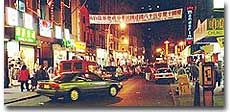
About every city in America is abode to a Chinatown. This street scene is from New York City's Chinatown — one of the biggest and best-known.
Most immigrant groups that had formerly come to America past choice seemed distinct, but in fact had many similarities. Most had come from Northern and Western Europe. Virtually had some experience with representative democracy. With the exception of the Irish, most were Protestant. Many were literate, and some possessed a fair caste of wealth.
The new groups arriving by the boatload in the Gilt Historic period were characterized by few of these traits. Their nationalities included Greek, Italian, Smoothen, Slovak, Serb, Russian, Croat, and others. Until cut off past federal decree, Japanese and Chinese settlers relocated to the American West Declension. None of these groups were predominantly Protestant.
The vast bulk were Roman Catholic or Eastern Orthodox. Still, due to increased persecution of Jews in Eastern Europe, many Jewish immigrants sought freedom from torment. Very few newcomers spoke any English, and big numbers were illiterate in their native tongues. None of these groups hailed from democratic regimes. The American form of authorities was equally strange every bit its culture.
The new American cities became the destination of many of the most destitute. In one case the tendency was established, letters from America from friends and family beckoned new immigrants to ethnic enclaves such as Chinatown, Greektown, or Little Italy. This led to an urban ethnic patchwork, with little integration. The dumbbell tenement and all of its woes became the reality for most newcomers until enough could be saved for an upwards motility.
Despite the horrors of tenement housing and manufacturing plant work, many agreed that the wages they could earn and the food they could eat surpassed their erstwhile realities. Still, as many every bit 25% of the European immigrants of this fourth dimension never intended to go American citizens. These then-called "birds of passage" only earned plenty income to send to their families and returned to their erstwhile lives.
Resistance to Immigration
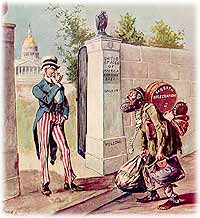
Political cartoons sometimes played on Americans' fears of immigrants. This 1, which appeared in a 1896 edition of the Ram's Horn, depicts an immigrant carrying his baggage of poverty, disease, anarchy and sabbath desecration, approaching Uncle Sam.
Not all Americans welcomed the new immigrants with open artillery. While manufacturing plant owners greeted the rush of cheap labor with zeal, laborers often treated their new contest with hostility. Many religious leaders were nonplussed at the increase of non-Protestant believers. Racial purists feared the genetic event of the eventual pooling of these new bloods.
Gradually, these "nativists" lobbied successfully to restrict the flow of immigration. In 1882, Congress passed the Chinese Exclusion Act, disallowment this ethnic group in its entirety. Twenty-5 years after, Japanese immigration was restricted by executive agreement. These two Asian groups were the but ethnicities to exist completely excluded from America.
Criminals, contract workers, the mentally ill, anarchists, and alcoholics were among groups to be gradually barred from entry past Congress. In 1917, Congress required the passing of a literacy test to gain access. Finally, in 1924, the door was shut to millions past placing an absolute cap on new immigrants based on ethnicity. That cap was based on the U.s.a. population of 1890 and was therefore designed to favor the previous immigrant groups.
Simply millions had already come. During the age when the Statue of Liberty beckoned the globe's "huddled masses yearning to exhale free," American diversity mushroomed. Each brought pieces of an sometime culture and made contributions to a new one. Although many onetime Europeans swore to their deaths to maintain their old ways of life, their children did not concord. Most enjoyed a higher standard of living than their parents, learned English easily, and sought American lifestyles. At least to that extent, America was a melting pot.
Source: https://www.ushistory.org/us/38c.asp
0 Response to "According to the Text, the Peak in American Family Conformity Occurred at the End of the"
Post a Comment